

For years, the financial world has watched Generation Z with a mix of curiosity and confusion. Many expected this digitally native generation to continue the cycle of flashy spending and conspicuous consumption that defined earlier eras. Instead, something unexpected has happened. A quiet revolution is taking place in how young adults handle their money, and it goes by a fitting name: quiet saving.
What Exactly Is Quiet Saving?
Quiet saving is not about extreme deprivation or living on instant noodles for every meal. Rather, it is a lifestyle focused on financial stability rather than outward displays of wealth. The core idea is surprisingly simple. Save money consistently. Invest regularly and automatically every single month, regardless of what the market is doing. Avoid unnecessary lifestyle inflation that creeps up as income grows.
Here is the real question. Would you rather have a healthy bank account and growing investments? Your social media feed might look perfectly ordinary. Or would you prefer to impress strangers online? Your financial foundation would remain shaky instead. For Gen Z, the answer is increasingly clear. Peace of mind matters more than temporary thrills. Knowing you are financially secure feels far better than showing off.
Why This Generation Prefers Quiet Saving

Understanding quiet saving requires looking at the world Gen Z has grown up in. This generation came of age during uncertain times. They watched parents and older siblings struggle through the 2008 financial crisis. They experienced the pandemic firsthand. Jobs vanished overnight. Emergency funds dried up completely.
They witnessed persistent inflation shrink purchasing power. They saw corporate layoffs become routine news. Traditional career paths no longer feel secure. These experiences left a deep mark.
These experiences have left a deep mark. Financial anxiety is real for many young adults today. The soaring cost of living has made it impossible to casually afford multiple loans for cars, new phones, or luxury items. According to Bank of America’s 2025 Better Money Habits report, over half of Gen Z adults cited high living costs as a top barrier to success. More than a third reported spending more than expected once they started supporting themselves.
This generation also rejected the hustle culture that burned out many before them. They watched older generations sacrifice well-being in pursuit of wealth. The result was stress and unfulfillment. Gen Z prioritizes quality of life instead. Work-life balance matters deeply. They want freedom and time to do things that make them feel alive. Quiet saving offers a path to that freedom.
Moving From Flex Culture to Financial Security
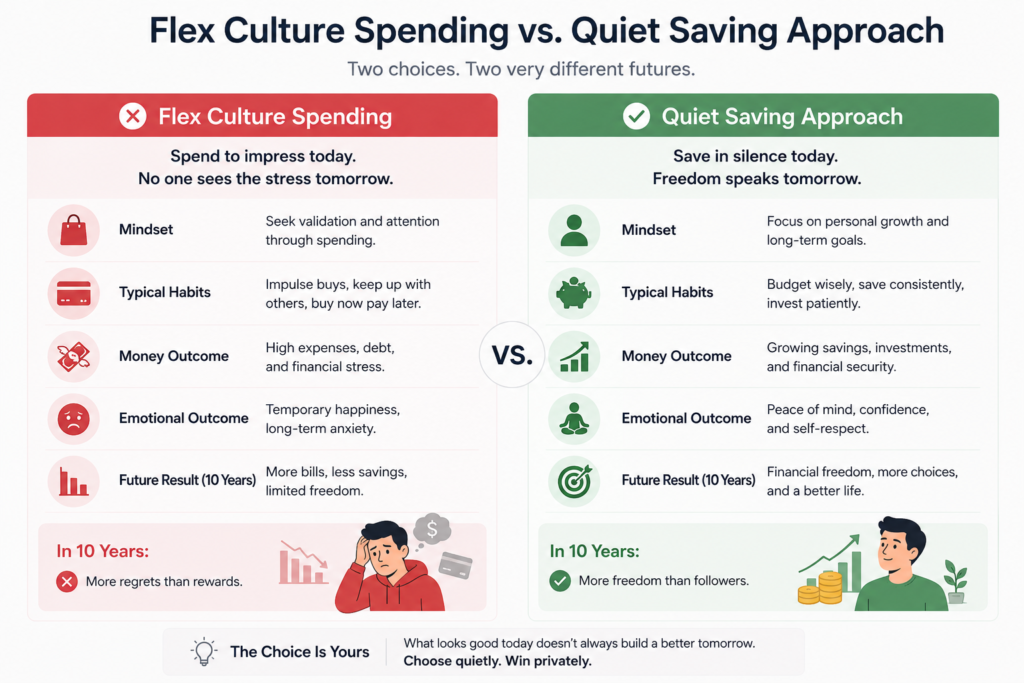
Success once meant expensive labels and fancy cars. It meant posting pictures of overpriced meals online. This was flex culture. Visible wealth served as the ultimate status symbol. Gen Z has largely rejected this approach.
Instead of chasing luxury goods for the sake of appearances, Young adults today find status in something far more meaningful. Quiet saving makes financial security the new flex. Growing investments create genuine confidence. Building passive income streams provides real freedom. Having a solid financial cushion offers more lasting value than any visible purchase.
This shift changes how success gets defined. The previous generations measured success by possessions. A house, a car, and luxury labels mattered most. Gen Z measures success differently. Money in the bank makes them feel secure. Living debt-free brings genuine relief. Having the freedom to pursue what matters brings true happiness. This goes beyond simple frugality. It means being intentional with money. It means refusing to let social pressure dictate financial decisions.
Comparing Quiet Saving With Other Trends
Quiet saving sometimes gets confused with other financial trends. However, important differences exist. One related trend is revenge saving. This emerged after the pandemic. Revenge saving is emotionally driven. It reflects a reaction to lost opportunities and economic instability. While quiet saving shares some similarities. Yet it tends to be more measured. It is more sustainable, too. The motivation differs completely. Fear or anger does not drive it. Clear-eyed understanding of priorities does.
Soft saving has also gained popularity among Gen Z. This flexible approach allows people to save what they comfortably can. They still enjoy life in the present. Some call it Gen Z’s answer to the extreme FIRE movement. Quiet Saving shares this emphasis on balance. It rejects sacrificing all present enjoyment for an uncertain future.
What sets quiet saving apart is its focus on discretion. Quiet savers do not broadcast financial goals online. They are not trying to impress anyone. They simply build foundations for a secure future. Each consistent step brings them closer to their goals.
How Investing Works With Quiet Saving
Quiet saving does not mean letting money sit idle. A basic bank account earns next to nothing. This approach involves putting money to work in stable ways. Compounding does the heavy lifting instead. This is not gambling on risky investments. It is not trying to time the market. It means intentional, regular investing in diversified options. These provide steady growth over time.
Exchange-traded funds offer a great starting point for many quiet savers. These funds spread investment across many companies. This reduces risk considerably. Growth opportunities remain strong. Consistency is the real key. Investing a set amount every month builds wealth steadily. This holds regardless of market conditions.
This approach reduces financial anxiety significantly. You no longer need to constantly monitor markets. Emotional decisions become unnecessary. When you consistently build your financial foundation, daily market fluctuations cause less stress.
Practical Steps for Starting Quiet Saving
Adopting a quiet saving approach involves straightforward steps. Start by building an emergency fund. Cover several months of basic expenses. This provides a safety net against unexpected events. Job loss or medical emergencies become manageable. Once that foundation exists, focus on regular contributions to investment accounts. Automate these contributions each month. This removes the need to think about them repeatedly.
Avoid the trap of lifestyle inflation. When income increases, spending tempts you to increase proportionally. Quiet savers resist this urge. They keep living costs manageable. Extra income flows toward savings and investments. This does not mean living miserably. It means being intentional about spending. Every dollar saved today creates freedom tomorrow.
Rethink what success looks like. Instead of measuring progress by possessions, measure it by what you build. A growing investment portfolio signals progress. Decreasing debt shows forward momentum. Increasing financial confidence matters too. These success indicators require no outward display.
The Bigger Picture of Quiet Saving
Quiet saving represents more than just a financial trend. It reflects a generational shift in values and priorities. This generation learned from past mistakes. They witnessed how debt creates panic during tough times. Watching flex culture drain bank accounts and stress out lives made an impact. Choosing a different path became the obvious answer.
The quiet savings movement highlights the importance of financial education. Many young adults actively seek resources to build better money habits. They want to understand how to save effectively. They aim to invest wisely. Long-term planning becomes a priority.
Final Thoughts
Quiet saving is not about being cheap. It is not about depriving yourself of life’s pleasures. Choosing long-term security over short-term status matters more. Peace of mind becomes the ultimate reward. You know you are building something real and lasting. The exhausting game of impressing others gets rejected. Focusing on what truly matters becomes the priority instead.
Generation Z faced economic challenges that could have overwhelmed many. Yet they responded with remarkable discipline. They save earlier than past generations. Emergency funds and long-term goals get prioritized. They build a different kind of wealth. This wealth cannot be seen in social media posts. However, it can be felt through quiet confidence and genuine financial security.
This is the power of quiet saving. It is not flashy. It does not go viral like a luxury haul. But it absolutely works in a world full of uncertainty, which holds incredible value.
For those seeking educational content on personal finance, Delight Bearer offers helpful resources. Complex topics become simple and actionable through their guidance. Financial security does not have to be complicated. With the right knowledge and consistent habits, anyone can build a stable financial future.