
Post-quantum cryptography hybrid deployment models are becoming essential as digital security faces a challenge that most people do not yet recognize. The encryption protecting online banking, private messages, and digital signatures will soon encounter an unprecedented threat. Quantum computers are advancing rapidly, moving from theoretical concepts to practical machines. These devices solve specific problems in seconds, while today’s fastest supercomputers would need millions of years. This capability brings incredible opportunities for science and medicine. However, it also creates serious risks for the cryptography that secures our digital world, making a post-quantum cryptography hybrid approach necessary.
Why Post-Quantum Cryptography Hybrid Matters
The danger from quantum computers does not arrive suddenly. Instead, it creeps in quietly. Cybercriminals are already harvesting encrypted data today, planning to decrypt it later when quantum computers become powerful enough. This tactic is known as “harvest now, decrypt later.” Every secret transmitted today could be exposed tomorrow. A post-quantum cryptography hybrid strategy protects against this looming threat.
The fundamental issue lies in the mathematics behind common encryption methods. Algorithms like RSA and ECC rely on mathematical problems that classical computers find difficult, but quantum machines solve easily. A quantum computer running Shor’s algorithm could break RSA encryption within hours. This exposure would compromise government secrets, personal health records, and digital certificates. Digital signatures verifying software authenticity could be forged. The internet’s entire foundation of trust would collapse without a post-quantum cryptography hybrid solution.
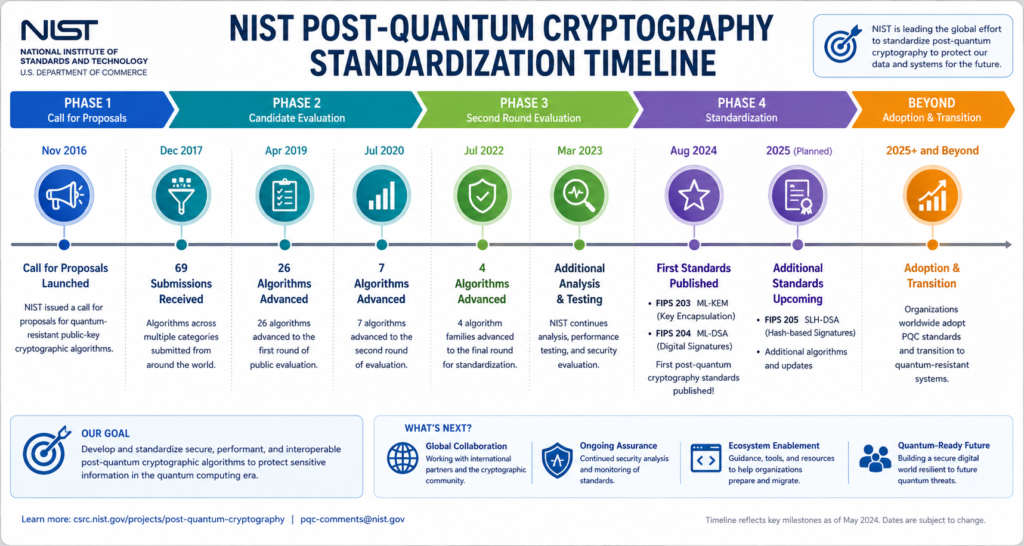
The National Institute of Standards and Technology (NIST) has addressed this problem since 2016 through its Post-Quantum Cryptography Standardization Project. This initiative identifies and approves new algorithms resistant to both classical and quantum attacks. The timeline remains tight because cryptographic upgrades require years of planning and execution. Adopting a post-quantum cryptography hybrid model now helps organizations stay ahead.
NIST Standards for Post-Quantum Cryptography Hybrid
Standardization drives the entire transition to post-quantum cryptography hybrid deployment. Without standards, organizations would develop incompatible solutions, creating security gaps. NIST conducted a public competition attracting cryptographic experts worldwide. Teams submitted algorithms, and specialists spent years testing their strength and efficiency.
In August 2024, NIST finalized the first post-quantum cryptographic standards. This milestone marked the shift from research to deployment. The standards include:
- FIPS 203 (ML-KEM) – Handles key encapsulation for secure key exchange
- ML-DSA (FIPS 204) – Provides digital signatures for identity verification
- SLH-DSA (FIPS 205) – Offers hash-based signatures, adding cryptographic diversity
Together, these standards form a complete post-quantum cryptography hybrid security suite. The selection process continued with additional candidates. NIST selected HQC, a code-based key encapsulation mechanism, for standardization. This alternative to lattice-based algorithms strengthens cryptographic diversity through different mathematical assumptions. Multiple options remain important because if one algorithm fails, others provide backup. This layered approach reflects NIST’s cautious methodology, supporting a robust post-quantum cryptography hybrid framework.
These standards connect to a broader regulatory ecosystem. The NSA’s Commercial National Security Algorithm Suite 2.0 provides a roadmap cascading into commercial markets. By 2030, post-quantum cryptography hybrid will become mandatory for software and firmware signing. The full transition target for national security systems arrives by 2035. These deadlines define compliance trajectories for secure systems worldwide. Organizations ignoring these timelines face serious consequences, including procurement non-compliance and certification delays. Implementing a post-quantum cryptography hybrid system now avoids these penalties.
Hybrid Models: The Post-Quantum Cryptography Hybrid Approach
The most practical outcome of standardization involves hybrid deployment models. A hybrid model combines classical algorithms with post-quantum algorithms within a single system. This post-quantum cryptography hybrid approach provides multi-layered protection during the long transition period. Organizations can add quantum resistance without replacing entire infrastructures. Hybrid models offer a safety net: if quantum attacks break classical components, post-quantum parts remain secure. Conversely, if new post-quantum algorithms reveal hidden weaknesses, classical components serve as fallbacks. This is the essence of a successful post-quantum cryptography hybrid strategy.
Hybrid deployment typically takes two main forms:
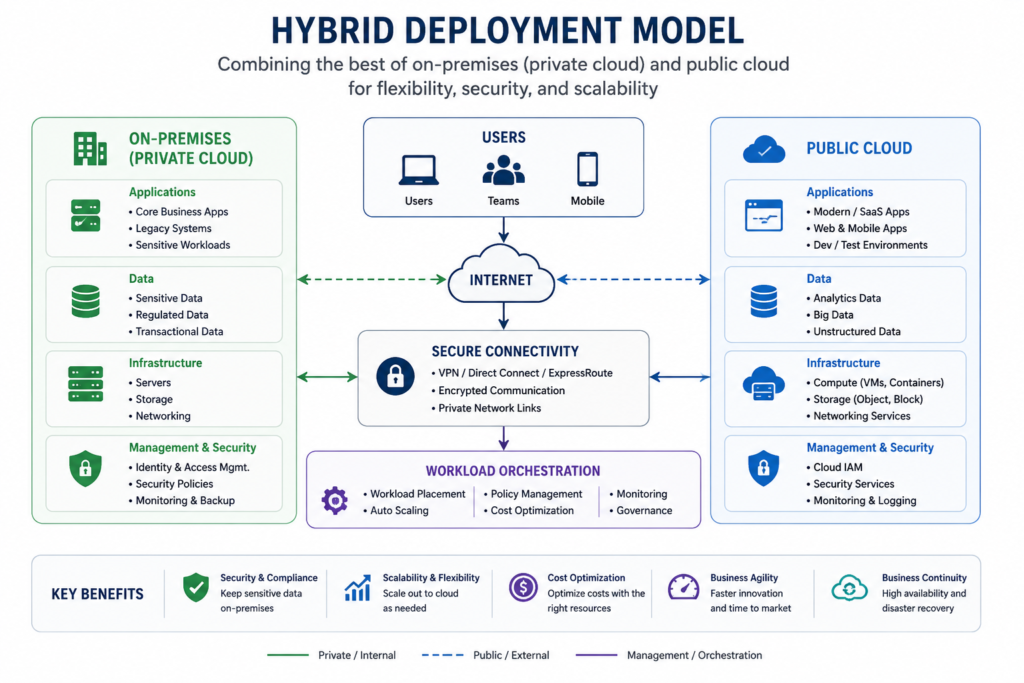
Hybrid Key Exchange: Systems run both a classical key exchange protocol like ECDH and a post-quantum key encapsulation mechanism like Kyber simultaneously.
Hybrid Signatures: Both classical and post-quantum signature algorithms sign the same message. Recipients must verify both signatures for message acceptance. This dual-verification requirement dramatically raises security barriers. Breaking one algorithm proves insufficient; attackers must break both.
The Internet Engineering Task Force (IETF) has standardized hybrid key exchange for TLS 1.3. TLS secures almost all web traffic. Adding hybrid support enables websites and browsers to adopt post-quantum cryptography hybrid protection gradually without breaking existing connections. The draft allows simultaneous use of two key exchange algorithms during the handshake phase. This technical detail carries enormous practical implications. The transition proceeds smoothly, avoiding forced simultaneous upgrades.
Real-world hybrid deployments exist today. Companies test hybrid PQC key exchange in production environments. Financial institutions explore automated configuration profiling for hybrid PQC deployment. These early adopters pave the way for broader adoption by discovering practical trade-offs and sharing industry lessons. The goal makes migration deliberate, measurable, and uneventful when deadlines arrive.
Challenges of Post-Quantum Cryptography Hybrid Deployment
Hybrid models appear elegant theoretically, but present practical challenges.
Size Constraints: Post-quantum keys and signatures are substantially larger than classical counterparts. Hybrid handshakes sending both datasets become several times larger than normal handshakes. This affects performance on low-bandwidth links and may require changes to transport-layer fragmentation. Constrained devices like sensors and smart meters face serious obstacles due to increased memory and bandwidth requirements.
Complexity Management: Hybrid systems require careful logic to combine different algorithm outputs securely. Key derivation processes must be clearly defined to ensure combined results match the strongest component’s strength. Implementation complexity increases, especially for constrained devices or lightweight protocol stacks. Additional code introduces more potential bugs, creating vulnerabilities. The cryptographic community develops clear guidelines and reference implementations, yet complexity remains a genuine concern.
Interoperability Issues: Different organizations may select varying hybrid combinations. One company might pair Kyber with ECDH, while another pairs HQC with RSA. These combinations must work together seamlessly. Standards bodies address this by defining clear profiles and recommended combinations. The IETF draft provides a foundation, but complete interoperability requires time and testing.
Hardware Limitations: Many devices possess immutable roots of trust, meaning cryptographic keys are burned into read-only memory during manufacturing. These keys cannot be updated after leaving the factory. Secure boot chains depend on algorithms that may become obsolete. Devices designed today with classical cryptography risk becoming vulnerable and non-compliant within their operational lifetime. This concern grows for devices expected to operate for ten to twenty years. The action window narrows quickly.
Why You Need to Level Up Now
Human nature encourages waiting until threats become imminent. This approach fails for post-quantum cryptography hybrid adoption. Migration is too large and complex for last-minute action. Upgrading cryptographic infrastructure requires years, not weeks. Public key infrastructure, underpinning websites and email, changes particularly slowly. Replacing certificates authenticating millions of servers proves monumental.
Waiting also exposes organizations to harvest-now-decrypt-later threats. Data safe today becomes vulnerable tomorrow if stored and decrypted later. This includes sensitive information like trade secrets, patient records, and government communications. Each delay adds to vulnerable information piles.
Regulatory pressure mounts continuously. NIST guidance indicates quantum-vulnerable algorithms will be deprecated by 2030 and disallowed by 2035. The NSA requires national security systems to adopt quantum-resistant cryptography for new acquisitions starting in 2027. These deadlines become contractual obligations across many industries. Non-compliance leads to lost business, fines, and reputational damage.
Organizations can start today with relatively small steps:
- Inventory cryptographic assets – Know which algorithms are used, where they are deployed, and what data they protect
- Test hybrid deployments in lab environments – Run experiments with PQC-enabled TLS and measure performance impacts
- Engage with standards bodies – Learn from industry experiences and contribute collective knowledge
- Update procurement requirements – Mandate post-quantum cryptography hybrid readiness for all new systems
The Road Ahead
The transition to post-quantum cryptography hybrid represents one of computing’s largest infrastructure projects. It touches every device, network, and software using public-key cryptography. The scale appears daunting, yet the path forward grows clearer monthly. Standardization provides algorithms and guidelines. Hybrid deployment models offer practical mechanisms for gradual migration. Regulatory deadlines create necessary urgency.
The industry moves from theory to practice. Early adopters test hybrid deployments in production environments and share findings. Standards bodies refine recommendations based on real-world feedback. Vendors build PQC support into products. The pieces fall into place. Execution remains the challenge.
Organizations starting now enjoy time advantages. Testing, learning, and adjusting without panic becomes possible. Building crypto-agile systems adaptable to future threat landscape changes is achievable. Protecting data against current and future adversaries becomes realistic. Organizations waiting face frantic scrambles, complete with rushed deployment mistakes and vulnerabilities.
Post-quantum cryptography hybrid adoption strengthens overall security posture beyond defending against quantum computers. Migration forces organizations to understand cryptographic dependencies and eliminate outdated practices. It encourages modern protocol adoption and best practices. In many ways, the journey proves as valuable as the destination.
Conclusion: Post-Quantum Cryptography Hybrid Is the Future
Quantum computing is inevitable, and it will break today’s encryption. The question remains whether we prepare adequately. Standardization provides the necessary tools. Hybrid deployment models offer practical paths without disrupting everything simultaneously. Regulatory frameworks push action. Organizations must decide their response.
The time for action is now. Data requiring protection already flows. Adversaries already collect it. Delaying only adds risk. Acting now adds security. The choice is clear, and the consequences are real.
For more educational content on post-quantum cryptography, hybrid, and other emerging technology topics, please visit delightbearer.com. The website offers valuable resources to help navigate the complex and rapidly changing landscape of digital security.