

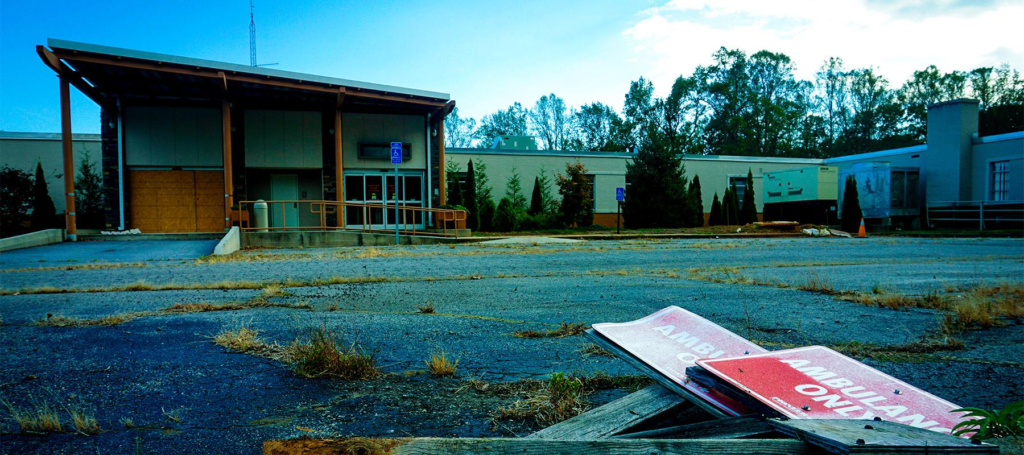
For people living in big cities, going to a doctor or hospital usually means a short drive across town. For millions of families in rural America, the same trip can take over an hour each way. Rural hospital closures are making this problem much worse. This difference in access is not just a small problem. It can decide whether someone lives or dies. Across the country, a serious crisis is happening: rural hospitals are closing quickly, federal funding is decreasing, and patients in rural areas cannot get proper pain management.
Why Rural Hospital Closures Are Happening Now
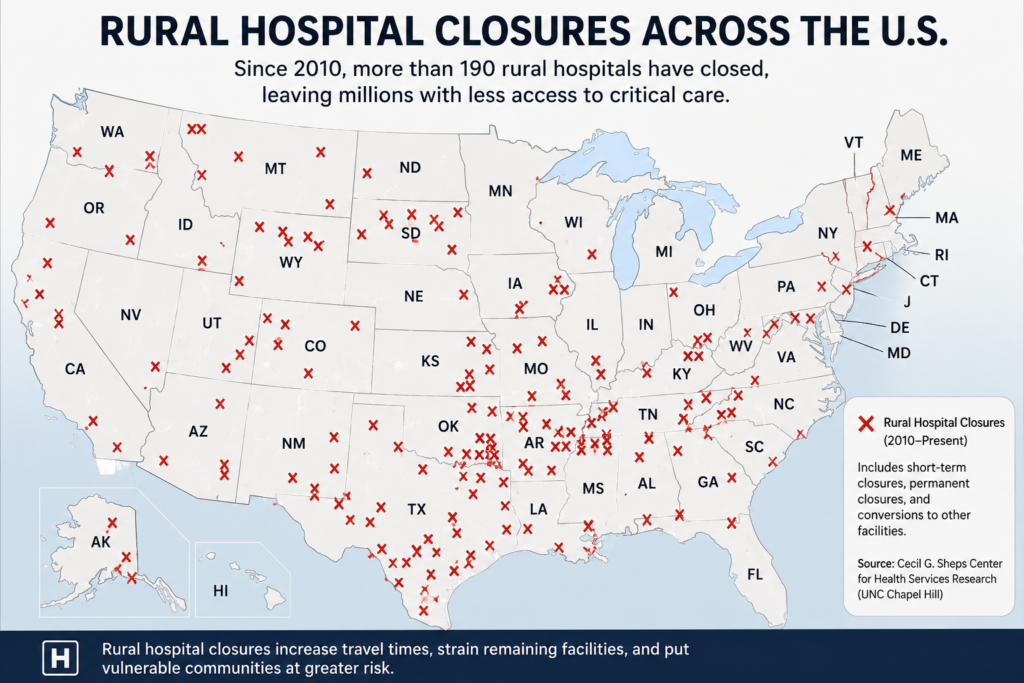
In recent years, hundreds of rural hospitals have closed completely or stopped offering core services such as inpatient beds. Data shows that hundreds of rural hospitals in the United States are at risk of closing. Many more have had to cut essential services like maternity care and chemotherapy to save money.
Why is this happening? The main reason is financial pressure. Rural hospitals serve many patients who use government insurance programs like Medicare and Medicaid. While these programs are important, they often do not fully pay for the actual cost of treating a patient. One industry report found that 46% of rural hospitals were losing money, meaning they spent more on patient care than they received in payment. When a business loses money year after year, it cannot stay open. Since 2010, over 180 rural communities have lost inpatient care completely due to closures or service reductions.
When a rural hospital closes, the effects spread through the entire community. Ambulances must drive much farther to reach the next open emergency room. This delay is dangerous for someone having a heart attack or stroke. Pregnant mothers may have to drive for hours to give birth, which increases the risk of problems. This is the reality for millions of Americans today.
How Federal Funding Cuts Lead to Rural Hospital Closures
Just when rural hospitals are struggling the most, federal funding is being cut. Hospitals depend on government payments to pay their nurses, buy equipment, and keep their lights on. Recent federal laws have made the financial situation much worse by reducing Medicaid eligibility and limiting federal payments. These cuts take away billions of dollars that hospitals were expecting to receive.
To make matters worse, the federal budget has proposed deep cuts to programs specifically designed to help rural areas. For example, one budget proposal called for cutting the budget of the Federal Office of Rural Health Policy (FORHP) by about 25%. That means less money for suicide prevention programs, for training doctors to work in small towns, and for supporting rural emergency medical services.
Even new funding programs designed to help may not be enough. A new $50 billion initiative was created to help rural hospitals, but this is small compared to the large cuts being made elsewhere. For many small hospitals, help cannot come fast enough. One rural hospital in Minnesota was running out of money and at risk of closing due to a simple payment error in the federal Medicare program that lasted for months. These examples show how fragile the system is. When the government cuts funding or makes simple mistakes, real people in small towns suffer.
Rural Hospital Closures and the Pain Management Crisis
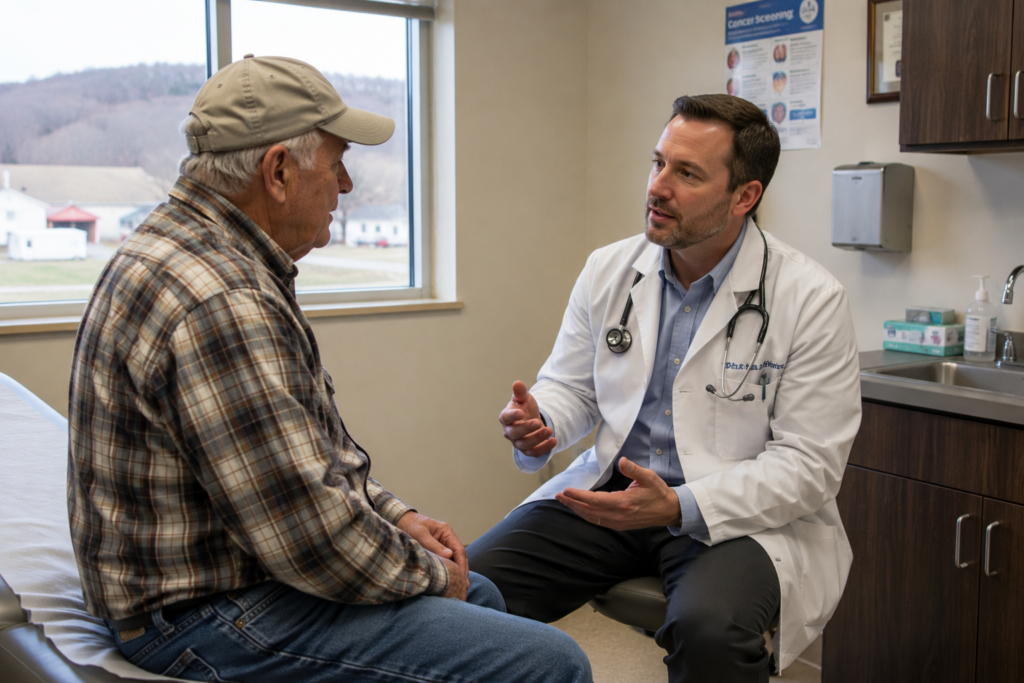
There is another part of this crisis that does not get as much attention, but it is also very painful: the inability to get proper pain treatment. For people living with chronic pain from arthritis, back injuries, or cancer, managing that pain is a daily battle. In rural areas, winning that battle is very hard.
Research shows that people living in rural areas are more likely to suffer from pain than people in cities. They also tend to have less access to the treatments that work best. In many rural towns, there are no physical therapists, no pain specialists, and no behavioral health experts to help people learn to cope with chronic pain. Because they cannot get the right care, rural patients are often prescribed opioids like Vicodin or OxyContin, which can be risky and addictive.
This is a difficult situation for both the patient and the doctor. A family doctor in a small town wants to help their patient who is in pain. But without access to a pain specialist or a physical therapist, the doctor has very few tools in their disposal. Some doctors end up prescribing opioids even when they know it is not the best long-term solution because they have no other options.
In addition, there are strict government rules about prescribing opioids meant to stop addiction. While these rules are important, they can make it very hard for a rural patient who genuinely needs pain medication to get it. Experts have noted that policies to stop opioid misuse may unintentionally make access worse for people in marginalized communities. This is a difficult reality: the same laws designed to protect people can end up leaving a cancer patient in a small town suffering without help.
What Needs to Change
The situation is serious, but solutions exist. Experts who study rural health have identified several clear actions that can make a difference. The key is to move away from short-term fixes and build a system that works for rural communities over the long term.
- First, payment systems must be changed. Hospitals should not be paid only based on the number of patients they treat. Instead, they should be supported for the role they play in keeping a whole community healthy. This could mean giving rural hospitals a set monthly amount of money to serve everyone in their area. This would give them stable funding to plan for the future.
- Second, technology like telehealth must be expanded. The COVID-19 pandemic showed that many doctor visits can be conducted via video call. For rural patients, this is a major improvement. A patient with chronic pain should not have to drive three hours to see a specialist. They should be able to talk to that specialist from their own living room. Investing in high-speed internet for rural areas is just as important as building new roads.
- Third, the way pain is managed must change. Rural communities often value self-sufficiency and toughness. Many people in rural areas view pain as a sign of weakness and may avoid seeking help. Public health campaigns need to teach people that managing pain is not a sign of weakness; it is a part of good medical care. At the same time, more funding must go toward training rural doctors in non-opioid pain treatments, such as physical therapy, exercise programs, and cognitive behavioral therapy.
- Finally, communities must work together. Hospital closures are not just a problem for the hospital board. They are a problem for the entire town. Local businesses, schools, and churches have a role to play in asking for better health services. When a community fights for its hospital, it is fighting for its own survival.
Conclusion
Health equity means that every person has a fair and just opportunity to be as healthy as possible. Right now, America is failing to meet this goal for its rural citizens. The closure of rural hospitals, the cutting of federal funds, and the lack of fair pain management are not separate issues. There are three parts of the same crisis. They are all signs of a system that too often forgets the families living far from the city.
Solving this crisis will require hard work and political courage. It will require investment in technology, changes to how doctors are paid, and a commitment to listening to the needs of rural communities. But the cost of doing nothing is too high. Every closed hospital means a longer ambulance ride. Every funding cut means a harder choice for a struggling family. And every untreated pain means another night of suffering without help. It is time to build a healthcare system that works for all of America, from the biggest city to the smallest farm. For more insights and educational resources on this and related topics, readers are encouraged to visit Delight Bearer at delightbearer.com.