
For long, parents have watched their children suffer from sickle cell disease with heavy hearts and very few options. The pain of seeing a child go through painful crises, the money problems from constant hospital visits, and the sad truth of losing children to a condition we can prevent and treat have been part of many Nigerian stories. However, things are now changing. The government has made a clear promise to ensure that every Nigerian, no matter where they live, how much money they have, or their position in society, can get proper testing and treatment. This sickle cell care expansion is not just another announcement. In fact, it represents real action, funding, and a strong commitment to save lives across the country.
Understanding the Scale of the Problem
To understand why this expansion matters so much, we must first look at how big the problem is. Nigeria has more people with sickle cell disease than any other country in the world. According to health officials, about 25 percent of Nigerian adults carry the sickle cell gene. This means that one in every four adults has the trait and can pass it to their children.
The numbers are truly shocking. Every year, about 150,000 babies are born with sickle cell disease in Nigeria. Even more sadly, about 100,000 of these children die each year from problems related to the condition. As a result, this makes up around 8 percent of all baby deaths in the country.
The survival numbers tell an even harder story. Only about half of children born with sickle cell disease in Nigeria live past the age of five. By contrast, in developed countries, more than 95 percent of children with the condition survive well past their fifth birthday. Therefore, this survival gap is what the government wants to close through the sickle cell care expansion.
Moreover, for those who do survive, life is not easy. Sickle cell disease causes many health problems, including organ damage, stroke, and higher risk of infections. The disease also affects education, jobs, mental health, and social life. Families face huge money problems, with treatment costs often pushing them deeper into poverty.
A Personal Story That Shows the Struggle
Senator Sunday Katung, who sponsored the Sickle Cell Disorder Research and Therapy Centres Bill, shared a story that shows just how personal this issue is. He remembered seeing a child who had just come back from the hospital after a painful crisis. The parents worried about taking him back because they had not paid the last bill. The child heard them and said, “Mom, dad, please allow me to die so that you can rest, and I too will rest.” Remarkably, that statement stayed with the Senator for 25 years and pushed him to bring this issue to public attention. This is the reality that thousands of Nigerian families face every single day.
Key Actions in the Sickle Cell Care Expansion
The government has launched several actions to resolve this crisis through the sickle cell care expansion. Specifically, the Nigeria Health Sector Renewal Investment Initiative focuses on better access to healthcare, financial protection, and improved health outcomes for all Nigerians.
Universal Newborn Screening in the Sickle Cell Care Expansion
One of the most important steps in the sickle cell care expansion is the Universal Newborn Screening Policy. This policy makes sure that every baby is tested for sickle cell disease at birth. Notably, finding the condition early is very important because it allows treatment to start right away, which can prevent many serious health problems that develop later.
Furthermore, the screening program is already running in selected primary and secondary healthcare facilities in Lagos State, Kano State, and the Federal Capital Territory. Additionally, the Clinton Health Access Initiative (CHAI) supports this work. Health workers are currently training, starting with the South-West zone. Moreover, there are plans to extend this training across the whole country.
Special Centers Supporting Sickle Cell Care Expansion
The government has set up and equipped six Centres of Excellence for Sickle Cell Disease, with one in each geopolitical zone. These centers have High-Performance Liquid Chromatography (HPLC) machines and other important testing tools. Consequently, they serve as regional hubs for newborn screening, specialized diagnosis, and complete care as part of the sickle cell care expansion.
In addition, there is a bill to establish Sickle Cell Disorder Research and Therapy Centres across the six zones, with plans to expand to every local government area. The bill has passed second reading in the Senate and would create a legal framework for these centres. Setting up the centres in the first phase will cost about N4.7 billion.
New Technology for Easier Testing
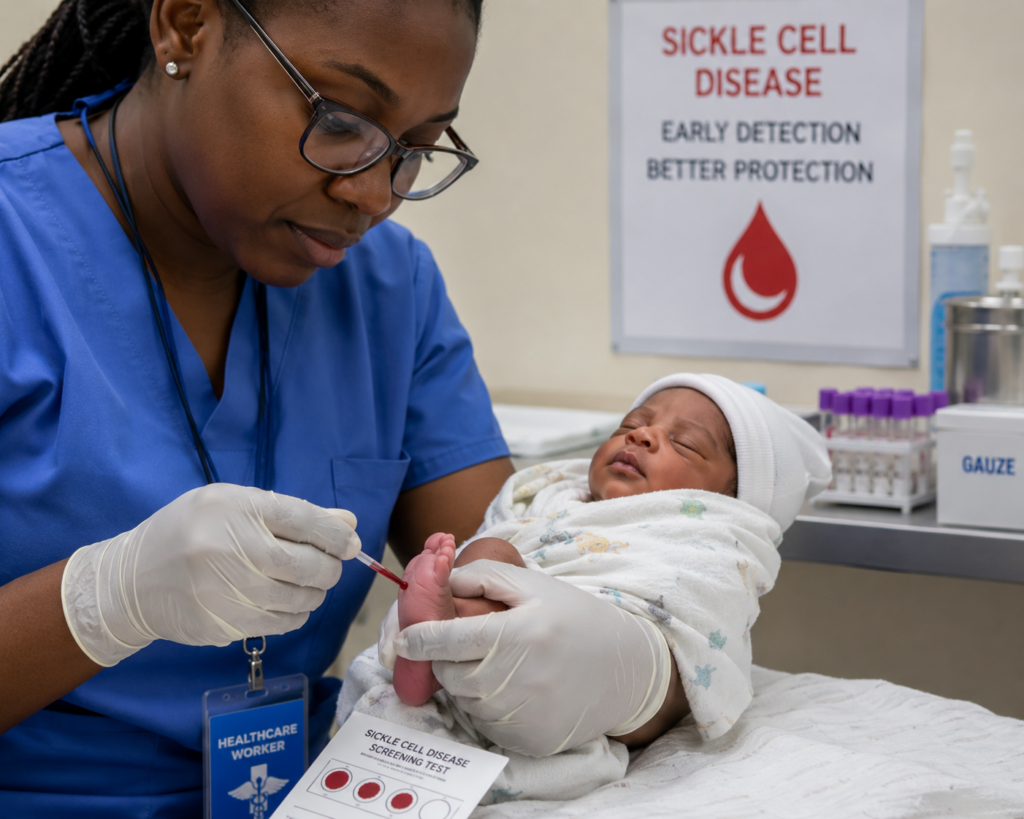
The government has approved and adopted Sicklescan, a new point-of-care testing technology. As a result, this technology provides faster, easier, and cheaper testing for sickle cell disease. Likewise, it can be used at all levels of healthcare, making it possible to reach communities that were previously left out.
Making Treatment More Available Through Sickle Cell Care Expansion
Finding the disease is only half the battle. However, treatment must follow, and the government is taking important steps to make treatment accessible to everyone through the sickle cell care expansion. For instance, Hydroxyurea is a proven treatment that reduces complications and improves quality of life for people with sickle cell disease. Nevertheless, its use in Nigeria has remained below 20 percent. Therefore, the government is working to increase the use of Hydroxyurea by training health workers and making the drug more affordable and available.
The National Guidelines for the Prevention, Control and Management of Sickle Cell Disease have been updated to strengthen the use of proven treatments, including Hydroxyurea therapy. Health workers are being trained across 16 sites to increase use of this life-changing treatment.
Protecting Families from High Costs
One of the most important parts of this expansion is the effort to protect families from high medical costs. The government is working with the National Health Insurance Authority (NHIA) to include affordable newborn screening, essential tests, and subsidized Hydroxyurea therapy in the national health insurance package.
The message is simple: access to life-saving care should be based on need, not on ability to pay. No Nigerian should be denied treatment simply because they cannot afford it.
Bringing Care Closer to Communities
Sickle cell services are being added to Primary Healthcare platforms and the Nigeria Package of Essential Non-Communicable Disease Interventions. This means that counselling, screening, referral, and treatment services are becoming available at the community level. People no longer have to travel long distances to get care.
The services are also being added to maternal, newborn, child, and adolescent health programmes. This makes sure that sickle cell care becomes a routine part of healthcare rather than a special service that only a few can get.
Teaching People About Prevention
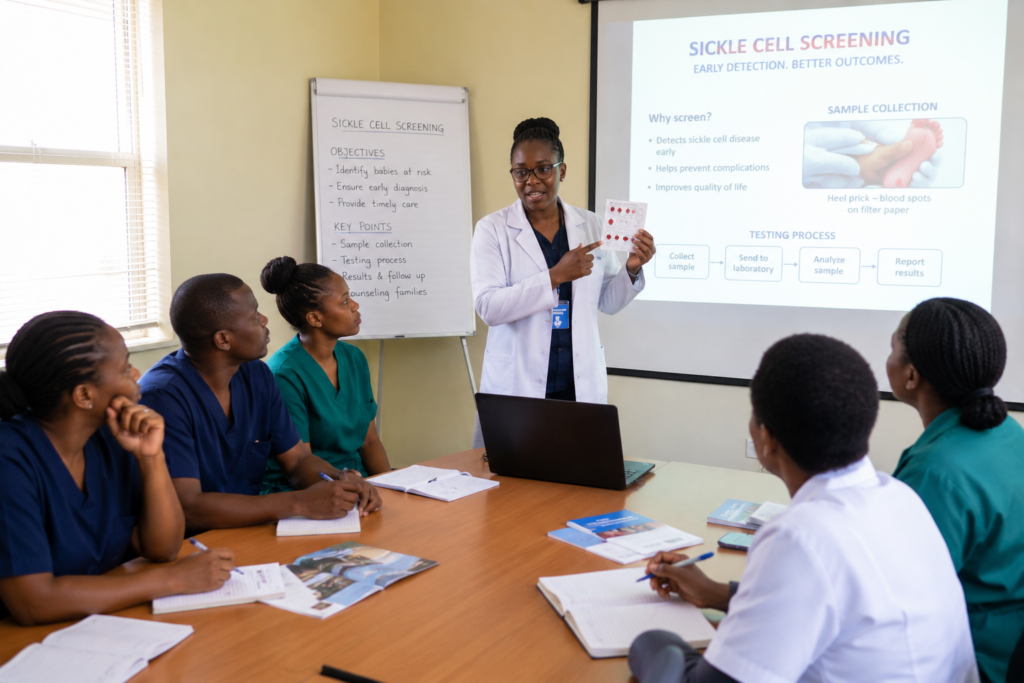
Prevention remains a key part of the government’s plan. The best way to control sickle cell disease is to prevent it. Nationwide awareness campaigns are ongoing, with education on genotype testing and genetic counselling.
More genetic counsellors have been trained across the country. Radio campaigns on newborn screening have started in all six geopolitical zones. The government is urging Nigerians to know their genotype and seek genetic counselling before marriage.
Traditional and religious leaders, community groups, development partners, and the media are being called upon to increase awareness efforts. This is a team effort that requires everyone to play their part.
Progress Already Made in the Sickle Cell Care Expansion
The efforts are already showing results. The Centre of Excellence for Sickle Cell Disease Research and Training at the University of Abuja has screened more than 38,000 babies in the Federal Capital Territory through newborn screening programmes. They have also created a disease registry with more than 10,000 patients across 25 centres nationwide.
These numbers represent real lives being saved and improved. Each baby screened early has a better chance of surviving and growing well. Each patient registered is getting better coordinated care through the sickle cell care expansion.
What Lies Ahead for Sickle Cell Care Expansion
While good progress has been made, there is still much work to be done. The government’s plans include updating and upgrading the six SCD Centres to improve access to complete care. New point-of-care screening technologies will be introduced for newborns and older age groups at all levels of healthcare.
The use of Hydroxyurea will be increased further. SCD services will continue to be added to maternal and child health programmes, especially at primary and secondary care levels. Community engagement and strengthening will remain a priority.
A Multi-Sectoral Action Plan Technical Committee has been set up to coordinate national efforts across ministries and agencies. This ensures that the response to sickle cell disease involves the entire government working together.
Nigeria is also playing a leadership role in global efforts to fight sickle cell disease. The country hosted the 5th Global Sickle Cell Congress in Abuja in 2025 and continues to contribute actively to the Africa CDC Regional Strategy on Sickle Cell Disease.
A Message of Hope
The sickle cell care expansion in Nigeria represents a turning point in the nation’s fight against this devastating disease. Notably, the government’s commitment to closing the survival gap is not just about policies and programs. Rather, it is about making sure that every Nigerian child has the chance to live a full and healthy life.
For instance, this expansion is about the mother in a remote village who can now have her baby screened at the local health centre. Similarly, it is about the father who no longer has to choose between paying for his child’s medication and putting food on the table. Likewise, it is about the young person living with sickle cell disease who can now get quality treatment without traveling hundreds of kilometers.
Admittedly, the journey is long, and the challenges are many. Nevertheless, with the government’s renewed commitment, the support of development partners, the hard work of healthcare workers, and the involvement of communities, a future where sickle cell disease no longer steals the lives of Nigerian children is within reach.
For those who want to learn more about sickle cell disease and other health topics, delightbearer.com offers helpful educational content. Knowledge is power, and understanding this condition is the first step toward preventing it and managing it effectively.
The promise has been made. The plans are in place. The work has begun. Now, it is up to all Nigerians to support this effort and make sure that no one is left behind. Every child matters. Every life counts. And every Nigerian deserves access to the care they need to live a healthy and fulfilling life.