
Physical AI and Embodied Intelligence are changing technology forever. For a long time, artificial intelligence lived inside computers and phones. It helped people search the internet, translate languages, and recommend movies. But now something new is happening. AI is leaving the screen. It is entering the real world and gaining a body. This technology is called Physical AI and Embodied Intelligence.
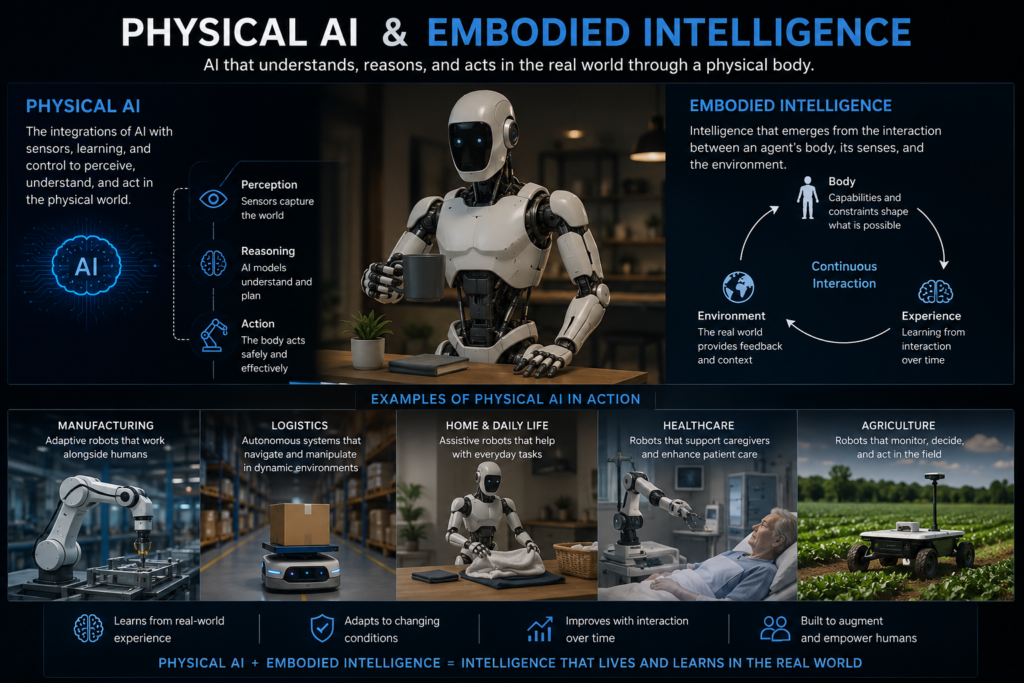
Physical AI means giving a brain to a machine that can move, touch, and change its surroundings. Embodied Intelligence means the AI learns by doing things in the real world, again and again. Together, these two ideas are changing how people live, work, and play. From human-like robots that help build cars, to power grids that send electricity where it is needed most, to smart devices that learn daily routines – Physical AI is here.
What Is Physical AI? A Clear Definition
Normally, AI works with words, pictures, and sounds. It can beat humans at chess or recognize a cat in a photo. But that AI has no hands, no legs, and no way to touch a real cup or open a real door.
Physical AI means giving a smart brain to a machine that can move, touch, and manipulate objects. The machine has a body. That body can be a robot arm, a wheeled device, a flying drone, or a two-legged robot that looks like a person. The brain takes in information from cameras, touch sensors, and microphones. Then it decides what to do. It might pick up a box, turn a knob, or step over a crack on the floor.
Embodied Intelligence means “learning by moving.” When a robot tries to walk and falls, it learns to shift its weight. When it tries to grab a ball and misses, it learns to close its fingers faster. The robot keeps trying until its body understands. Embodied Intelligence gives robots the chance to learn from experience.
Together, Physical AI and Embodied Intelligence create machines that work in messy, unpredictable real-world places – not just clean, tidy labs.
Humanoid Robots That Work Alongside People
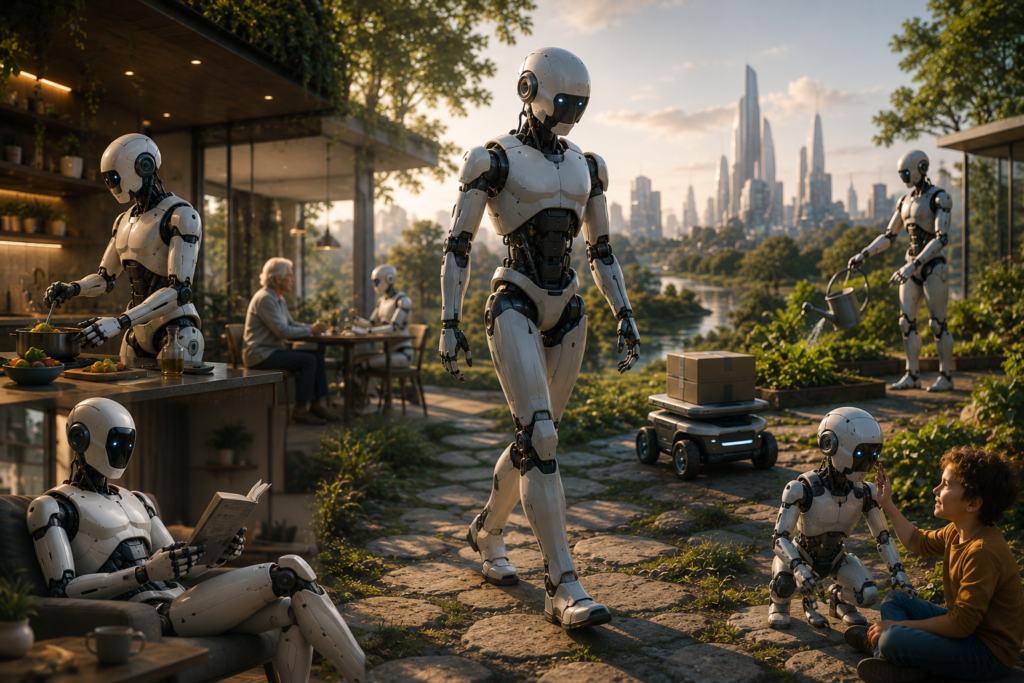
One interesting example of Physical AI is the humanoid robot. A humanoid robot has two arms, two legs, a head, and a torso, similar to a person. The world is built for human bodies. For instance, stairs, door handles, steering wheels, and tools are designed for human hands and feet. Consequently, a robot shaped like a person can use those same things without changing the factory, the hospital, or the home.
How Humanoid Robots Differ from Old Factory Robots
In many factories today, robots already work. But most of those robots are big arms bolted to the floor. They are dangerous to be near, so they stay inside cages. Humanoid robots are different. They are designed to work right next to people, safely and helpfully. For example, they can hand a worker a heavy tool, carry a stack of boxes across the room, or hold a light so a mechanic can see better.
Learning and Adapting in Real Time
These robots do not just follow a set of steps. Instead, they use Physical AI to observe what a human does, understand the task, and adjust their actions as circumstances change. For example, if a human drops a screw, the robot sees it fall, bends down, picks it up, and hands it back. That requires the robot to see, move, balance, and decide in less than one second.
Uses in Hospitals
Hospitals are also testing humanoid robots. They can bring medicine to a nurse, carry dirty laundry to the cleaning room, or help a patient stand up from a chair. The robot does not get tired and never complains. As a result, this lets human doctors and nurses spend more time caring for people rather than doing the heavy lifting.
According to the U.S. Bureau of Labor Statistics, jobs for robotics engineers are expected to grow 9 percent from 2020 to 2030. That is faster than many other jobs. Companies around the world are building better humanoid robots. They need smart people to design the brains inside.
Autonomous Energy Grids That Manage Electricity Without Humans
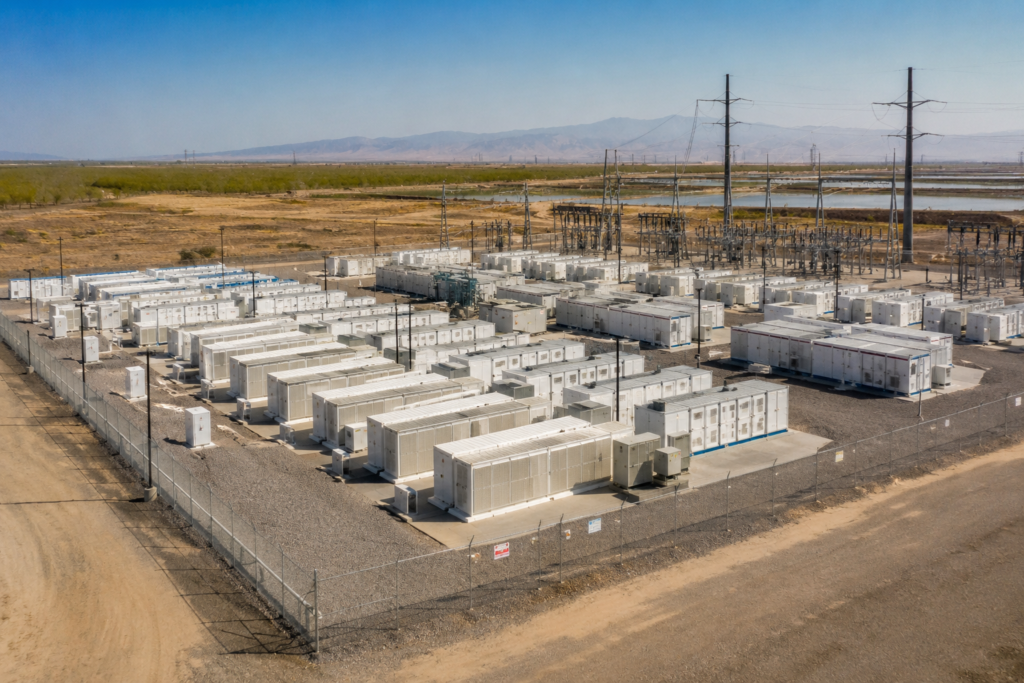
Another place where Physical AI makes a big difference is electricity delivery. Most people do not think about the power grid. They flip a switch, and the light turns on. Behind that switch is a large, complicated network of power plants, wires, transformers, and substations. For many years, a human operator watched a big board of lights and dials. When too many people turned on their air conditioners, the operator called a power plant to ask for more electricity.
Why the Old Method Fails
That old method is slow. It often leads to blackouts when a storm hits or when a hot day makes everyone use air conditioners at once. Physical AI changes this. An autonomous energy grid uses sensors, smart meters, and AI brains to watch the flow of electricity every second. Therefore, if a tree falls on a power line, the grid notices instantly. It sends electricity around the broken part. Most customers do not even see a flicker.
Learning from Weather Forecasts
These smart grids also learn from weather forecasts. For example, if the AI sees a cloudy day coming, it knows solar panels will produce less power. So it asks a battery storage system to save energy the day before, or it tells a wind turbine to spin faster. Everything happens automatically. No human presses a button.
The U.S. Department of Energy has stated that smart grid technologies could reduce the length of power outages by up to 30 percent. That means less time in the dark and fewer spoiled groceries. For businesses, fewer outages mean less lost money and more reliable work.
Demand Response to Save Energy
Physical AI also helps save energy. The grid can talk to smart appliances in homes. If the grid gets too busy on a hot afternoon, it can ask an air conditioner to run a little less for ten minutes. Most people would not notice the difference. However, together, millions of homes doing that small thing can prevent a blackout. This is called demand response. It is a good example of Physical AI working behind the scenes.
Smart Devices That Learn and Act Independently
However, Physical AI is not only in large factories or power grids. It is also inside small devices around the house. Consider a robot vacuum. The first robot vacuums bounced around randomly. They bumped into a chair, turned, bumped into a wall, and turned again. It worked, but it was not very smart.
Robot Vacuums That Map Rooms
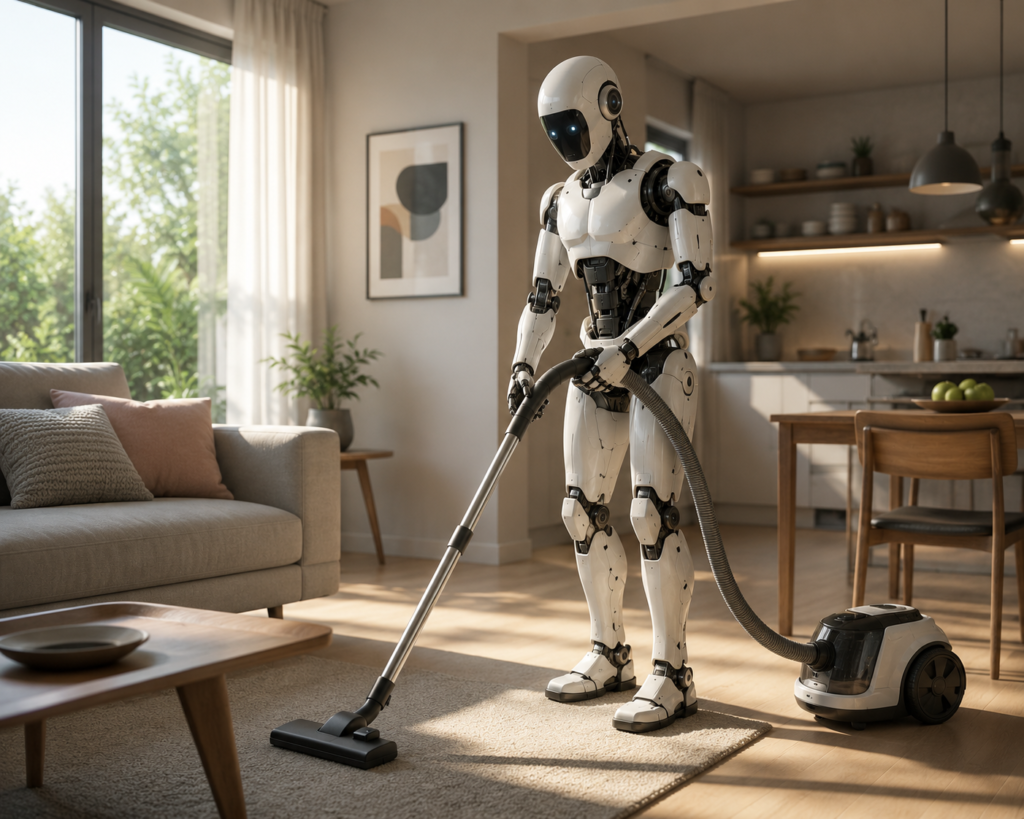
Today’s robot vacuums use Physical AI. They have cameras and sensors that map the room. They learn where the couch is, where the rug starts, and where the pet bowl sits. In addition, they remember which areas get dirtiest fastest. They even return to their charging station before the battery dies, then go back to finish the job. Consequently, the robot learns from cleaning your floor day after day.
Smart Thermostats That Learn Schedules
Smart thermostats are another example. A normal thermostat keeps the house at one temperature. A smart thermostat watches when people wake up, leave for work, come home, and go to sleep. It learns the pattern. Then it automatically turns down the heat when no one is home and warms the house just before people return. The U.S. Department of Energy estimates that using a smart thermostat can save a family about 10 percent on heating and cooling bills each year. That adds up to real money over time.
Smart speakers and displays also use Physical AI when they connect to lights, locks, and cameras. A person can say, “Good night,” and the AI turns off all the lights, locks the front door, and lowers the shades. The AI is not just listening – it is acting on the physical world. It changes real things.
Even refrigerators are getting smarter. Some can see what is inside, notice when milk is almost gone, and add it to a shopping list. In the near future, a smart fridge might order milk for delivery without anyone asking. That is Physical AI making daily life easier.
Challenges in Physical AI Systems
Building Physical AI is not easy. The real world has many surprises. A robot in a lab knows exactly where everything is. But a robot in a real home might find a toy on the floor, a wet spot from a spill, or a cat that suddenly runs across the room. The AI has to handle all of that without hurting anyone or breaking anything.
Safety as the Top Concern
Safety is the biggest concern. A computer AI that gives a wrong movie recommendation is annoying. But a robot arm that swings the wrong way could hurt a person. That is why companies test Physical AI for thousands of hours before letting it work near people. They add emergency stop buttons, soft padding, and sensors that sense when something touches the robot so it can stop moving.
Cost and Affordability
Cost is another challenge. Humanoid robots are still very expensive, often costing as much as a new car. Over time, robots will become more affordable. Many experts believe that within ten years, small businesses and even some families will be able to buy a helper robot.
There are also questions about jobs. Will robots take work away from people? History shows that new technology usually changes jobs instead of taking them away. With Physical AI, people will likely work next to robots. The robots will handle heavy, dirty, or dangerous tasks. Humans will do the jobs that need kindness, creativity, and decision-making.
Future Uses of Physical AI
Self-driving cars are one well‑known example of Physical AI. A self‑driving car must see the road, understand traffic lights, avoid pedestrians, and make turns – all in a world full of other human drivers who sometimes make mistakes. Companies are still perfecting this technology, but every year, self‑driving cars get better.
Drones for Delivery and Farming
Drones are another fast‑growing area. Delivery drones can fly a package from a store to a customer’s yard. Farming drones fly over fields, take pictures of crops, and tell the farmer which plants need water or which ones have bugs. The drone then sprays only those plants, saving water and chemicals.
Disaster Rescue Robots
In disaster zones, Physical AI robots can go where humans cannot. After an earthquake, a snake‑like robot can slip through tiny gaps in broken concrete to look for survivors. A flying drone can map the damage from above. A large robot can lift heavy debris, so rescue teams can reach trapped people faster.
Medical Microrobots
In hospitals, tiny robots are being tested that swim through blood vessels to deliver medicine exactly where it is needed. That is Physical AI at a very small scale. The robot’s brain is simple, but its body is small enough to travel inside the human body.
All of these examples share one thing: the AI is not just thinking. It is doing. It is touching, moving, lifting, flying, and swimming. It is changing the physical world.
Conclusion
Physical AI and Embodied Intelligence begin a new chapter in technology. For decades, AI lived on screens. It answered questions and played games. Now, AI has a body. It works next to people on factory floors. It runs energy grids that keep the lights on. It vacuums floors and adjusts thermostats. It drives cars and flies drones. Every day, these machines become smarter, safer, and more helpful.
The move from screen‑based AI to physical AI will touch every part of life – how people work, how homes run, how cities move, and how doctors heal. The journey has just begun, and many more developments are ahead.
For readers who want to learn more about these technologies in simple, clear language. Visit https://delightbearer.com/ to explore articles, guides, and resources that make complex topics easy to understand. The future is physical, and understanding it starts with curiosity and the right learning tools.